Most creators assume that better production means better performance. Better lighting, smoother edits, more polished visuals. If the video looks more professional, more people will watch it.
The data says otherwise.
Creators who spend months testing content across Instagram, TikTok, and YouTube Shorts consistently arrive at the same uncomfortable conclusion: the content that performs best is usually the simplest content they have ever made. Shot on a phone, minimal editing, just talking. The production did not change the trajectory. What changed was the topic and how it was framed.
Topic beats production, every time
The clearest lesson from systematic content testing is that what you talk about matters far more than how it looks.
A perfectly lit, professionally edited video about a topic nobody has a strong reaction to will sit at 200 views. A casual iPhone clip introducing an idea that makes your audience think "wait, I disagree with that" can hit hundreds of thousands.
The reason is how Instagram distributes content. Views and likes are passive signals. Comments and shares are active ones. When someone comments on your post, especially if they are disagreeing, adding to the conversation, or tagging someone who needs to see it — that activity signals to the algorithm that the post is worth showing to more people. Comments create conversations. Conversations create distribution.
Production value does not generate comments, but a premise that makes people want to respond does.
Frame content around opinions and reactions, not information
The shift that changes everything is moving from "how do I teach something" to "how do I make someone have an opinion."
Educational content has its place. But information alone does not make people comment. What makes people comment is when content introduces an idea they agree with strongly, disagree with strongly, or have experienced themselves.
Instead of posting everything you know about a topic, introduce one idea that makes your audience think "I have something to say about that." That framing is the difference between a post that gets likes and a post that starts a conversation.
Practical ways to frame content this way:
Post a take your audience is likely to push back on. Not bait, but a genuine perspective that not everyone shares. People who agree will validate it. People who disagree will explain why. Both are comments that will push your content.
Post about something your audience has experienced but rarely sees acknowledged. The frustrating thing everyone in your niche deals with that nobody talks about. Recognition drives shares.
Post a question that has no clean answer. Not "what is your favourite colour" but something that actually requires thought and has different legitimate answers depending on who is reading.
The comment section is not a byproduct of a good post. For distribution purposes, it is the point.
Volume gets easier when you simplify production
One of the clearest patterns from high-output testing periods is that volume becomes manageable when you stop treating every post like it has to be exceptional.
Posting three or four Reels per day sounds exhausting if each one requires hours of filming, editing, and polishing. It becomes possible, and even sustainable, when a post is just you talking about one idea for sixty seconds, with captions and a text overlay.
The simplification is not laziness. It is a deliberate shift toward what actually drives performance. If a casual iPhone video with good framing consistently outperforms a polished production, the time spent on polish is time not spent on the thing that matters: finding the next premise that generates a reaction.
The content that does not perform tells you as much as the content that does. Every post that lands flat is data. After enough posts, the pattern becomes clear: what topic, what framing, what format your specific audience responds to. That information is worth more than any production upgrade.
When something works, stay in that lane
A common mistake after a post breaks through is immediately pivoting to something different. The impulse is understandable. You want to prove it was not a fluke, or you get bored of the format, or you think you need to keep evolving.
The better move is to keep exploring the lane that worked.
If a specific topic, framing style, or type of question drove significantly more comments and views than usual, that is a signal about your audience. Make more of it. The audience who engaged with that post is now watching your next one. Give them more of what they came for.
This does not mean posting the same thing forever. It means treating a successful format as a framework to iterate on rather than a one-off to abandon.
Your comment section is your content calendar
One of the most overlooked sources of content ideas is the comment section of your own posts.
When a post drives real engagement, the comments tell you exactly what your audience wants to see next. What they agree with, what they push back on, what follow-up questions they have, what adjacent topics they bring up. That is direct feedback from the people who care enough to interact with your content.
Your audience will tell you what your next videos should be. The job is to pay attention.
This also changes how you think about comment engagement. Replying with something that adds to the conversation keeps the thread active and gives you more signal. A comment section with real back-and-forth is both better for distribution and more informative than one that just accumulates likes.
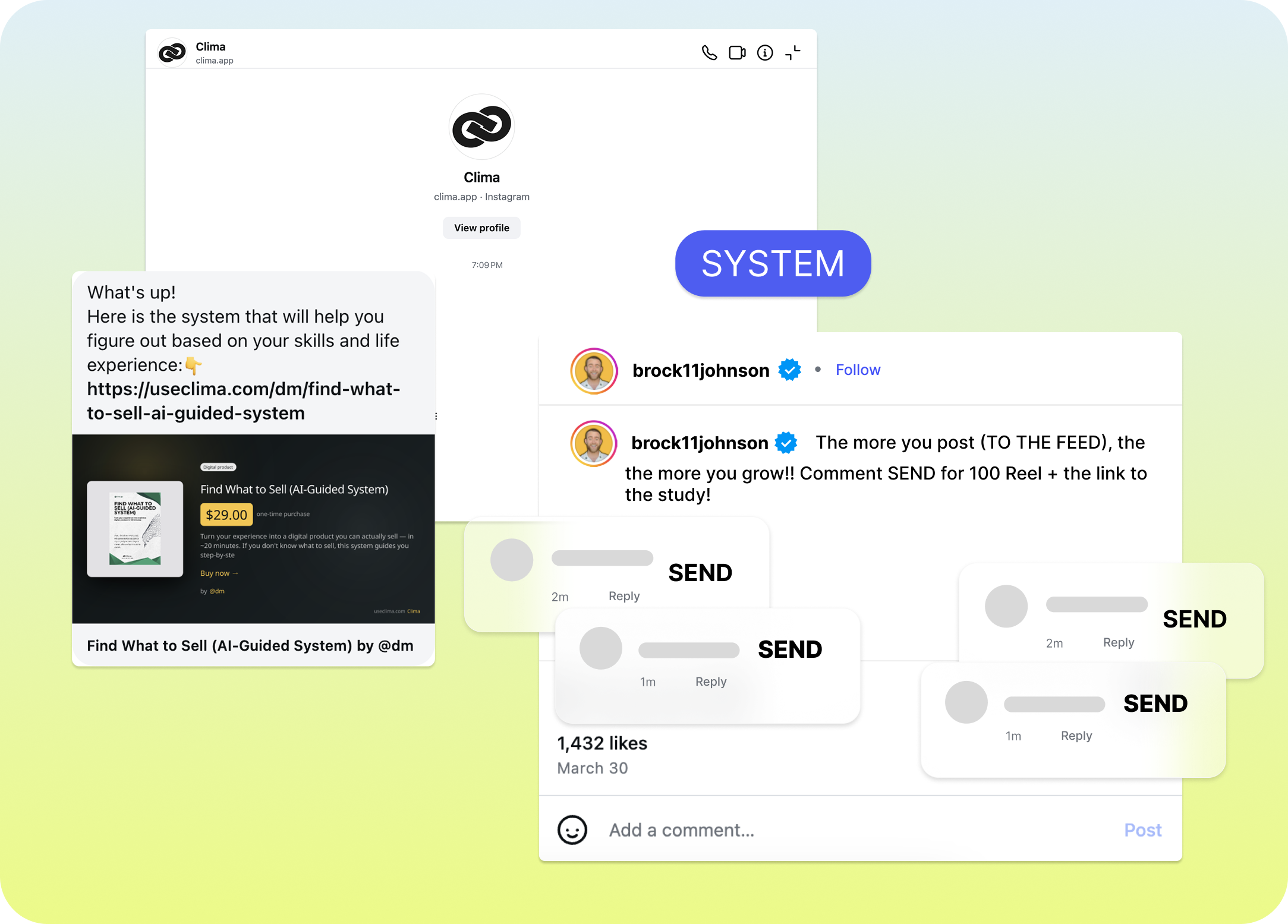
At the point where comments are coming in faster than you can reply to them manually, automation handles the repeatable part. Keyword triggers mean anyone who asks the same common question or comments a specific word gets an instant response, while you focus on the conversations that actually require your attention.
The summary in plain terms
Simpler is often better. Not because quality does not matter, but because framing matters more, and a clear premise with a reaction-worthy angle will outperform a polished video with a forgettable one every time.
Topic beats production. Conversation beats presentation. A strong premise matters more than a fancy edit.
The path to consistent growth is not finding the perfect formula and executing it flawlessly from day one. It is posting enough content, paying attention to what works, and staying in that lane once you find it.