Most Instagram accounts are stuck because of bad content, but fixing the content is not always enough. Even with great posts, a niche that is too wide will keep you invisible.
It feels like a contradiction. A broader topic should reach more people. But that is not how Instagram discovery works. A broad niche means your content competes with an enormous pool of identical posts, none of which stands out enough to be remembered, saved, or shared.
The accounts that grow consistently are usually the ones that picked a corner and refused to leave it.
Why broad niches feel safe but perform poorly
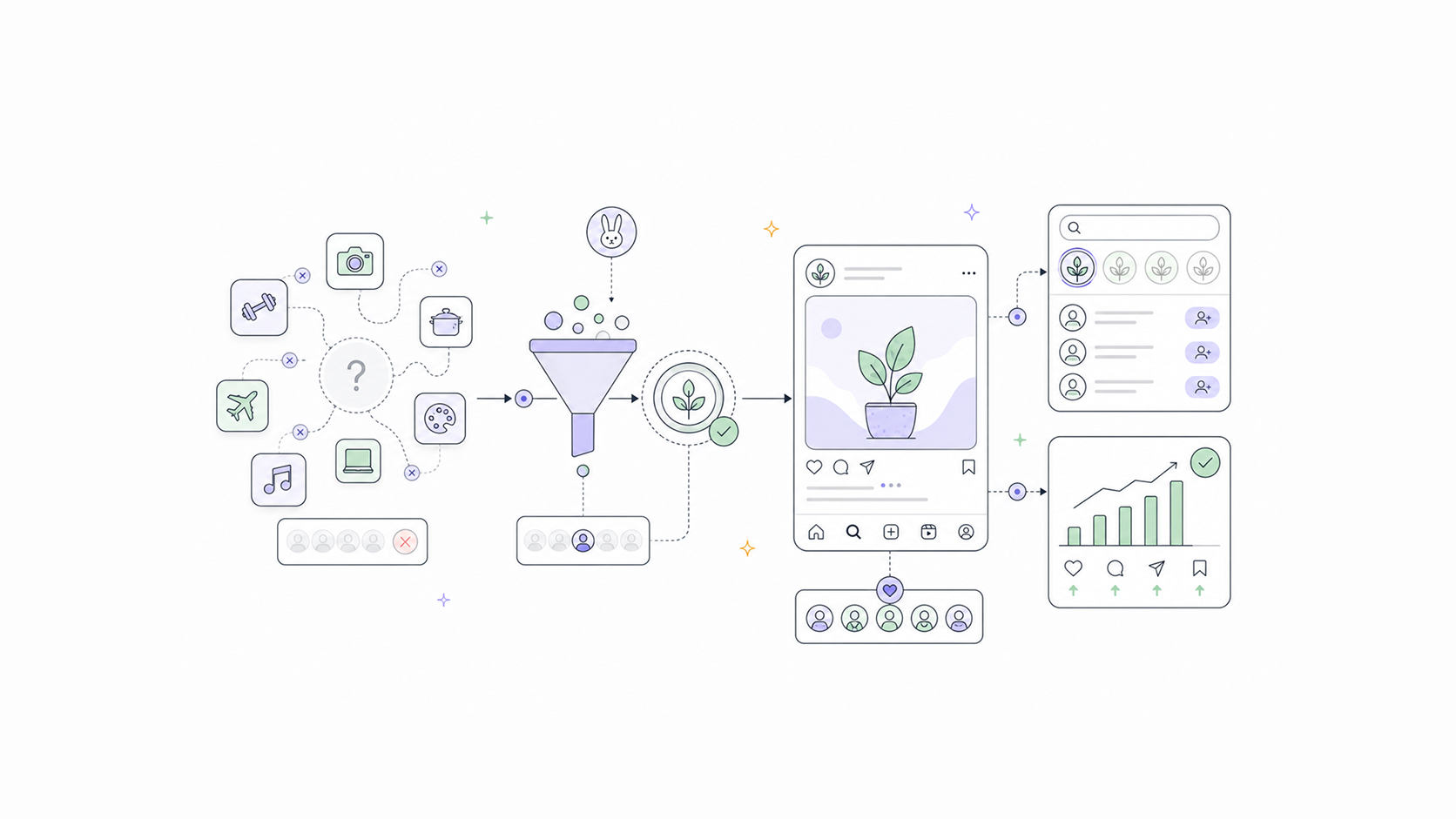
When you post about fitness, cooking, business, or any large category, you are competing with millions of posts targeting the same audience. Instagram has no way to connect your content to a specific person because the content does not describe a specific person.
The algorithm surfaces content to people based on signals like what they have watched, saved, and engaged with before. If your account posts general fitness content, you are a signal that looks identical to thousands of other accounts. There is no reason for the algorithm to prioritize you over anyone else.
A broad niche also makes it harder for a viewer to feel like the content is for them. The difference between someone stopping to watch and someone scrolling past is usually one thing: does this feel like it was made for me.
General content almost never creates that feeling. Specific content almost always does.
What niching down actually means in practice
Niching down is not about making your content less interesting. It is about making it more precise.
Instead of fitness, strength training for people over 40 who have never lifted before. Instead of cooking, quick weeknight meals for parents of picky eaters. Instead of business advice, Instagram growth for local service businesses.
The topic is the same. The audience is defined. That definition changes everything about how the content performs, because now when the right person encounters it, they feel found rather than just informed.
That specificity also changes your comments section. General content gets generic reactions. Specific content gets paragraphs. People tell you their story, ask what to do next, and share the post with someone who needs to see it. Those responses become your next ten pieces of content.
The first month feels worse
This is the part most people do not expect and the reason most people give up before it works.
When you narrow your focus, you will likely lose followers who came for the broader content. Your reach may dip for a few weeks while Instagram recalibrates what your account is about.
That recalibration is the point. You are training the algorithm to connect your content with the right audience instead of a large undefined one. The short-term dip is the cost of that realignment.
The signal to watch during this period is not follower count or reach. It is saves. When niche-specific content gets saved at three or four times the rate of your previous posts, that is the indicator the content is finally meaning something specific to someone. Saves are how people bookmark content they want to return to. A post that gets saved is a post someone found genuinely useful.
By month three, the comments change. By month five, the growth compounds. The narrower you go, the faster it moves, which is basically the opposite of what most people believe until they experience it.
How to find your corner
If your current account is stuck, look at your content and ask one question: who specifically is this for.
Not "people interested in fitness." Not "small business owners." An actual person with an actual situation. Someone in their late 40s who is intimidated to walk into a weight room for the first time. A solo founder posting on four platforms who is exhausted from switching between tools. A local bakery owner who wants to stop spending Sundays answering the same DMs.
The more precisely you can describe that person, the more likely they are to encounter your content and feel like you made it for them.
Once you have that person, stick with them. Every post should be written for that one specific someone. Not forever, but long enough to build a clear signal the algorithm can understand and act on.
This connects directly to the question-first approach: once you know exactly who you are talking to, the content writes itself. You already know what they are searching for, what they are confused about, and what would make them stop scrolling. We covered the full approach in The Question-First Content Strategy.
What happens when the right people find you
The accounts that turn followers into customers, clients, or buyers are rarely the biggest in their category. They are usually the most specific.
A creator with 4,000 followers who speaks to one exact person with one exact problem will consistently out-earn a creator with 100,000 followers who speaks to everyone and no one. The follower count is not the variable. The specificity is.
When someone follows you because your content describes their exact situation, they are already a warm lead. They do not need to be convinced you understand them. You have already demonstrated it. That trust drives saves, shares, DMs, and eventually sales. None of those outcomes require a large following.
If your account is stuck at a few thousand followers and your content is good, look at how wide your niche is before you change anything else. That is almost always the answer.