If you are still adding twenty or thirty hashtags to every Instagram post, you are working with an outdated playbook. Instagram officially capped hashtags at five in December 2025, and posts with more than five are no longer pushed in the Explore feed, hashtag browse pages, or Reels recommendations.
This is not a minor tweak. It is the end of a strategy that many creators and businesses have relied on for years. Here is what changed, why it happened, and what to do instead.
Does Instagram still use hashtags in 2026
Yes, but their role has changed significantly. Hashtags are no longer a reliable way to expand your reach. They now act mainly as classification signals, helping Instagram understand what your post is about. They can also help people find your content when they search for a specific hashtag, such as #artlovers.
Instagram's AI now reads your caption text, on-screen text, audio, and image content directly to understand what your post covers. Hashtags are one input among many, not the primary one. The algorithm no longer needs thirty tags to figure out your topic. It has already worked that out from everything else in the post.
Why Instagram introduced the 5-hashtag limit
Instagram's head Adam Mosseri has been saying for years that hashtags do not drive meaningful reach. The December 2025 change formalized what the algorithm had already been doing in practice.
The official reasoning was that long hashtag lists were associated with spam, low-quality content, and attempts to game the system. Too many tags created noise rather than helping people find relevant content. Limiting them reduces that behavior and pushes creators toward choosing tags that actually match what they are posting.
The removal of the "follow hashtags" feature in December 2024 was an earlier signal of the same shift. Once users could no longer follow hashtags, hashtag-based discovery was already declining. The five-tag cap is the logical conclusion of that direction.
Do hashtags increase reach anymore
Not in the way they used to. Three independent studies from late 2025 and early 2026 consistently showed that hashtags help Instagram classify content but do not directly expand distribution. The algorithm already classifies your content based on what it contains. Hashtags reinforce that signal, but they are not creating it.
What actually drives reach in 2026 is watch time, saves, shares, and sends, these are signals that tell the algorithm your content was worth someone's attention. Five well-chosen hashtags that precisely match your audience and content are more effective than thirty random tags, but neither approach replaces strong content.
What hashtags actually do now
Think of hashtags in 2026 as topic labels rather than distribution tools. They help Instagram verify what category your content belongs to, which can influence whether it gets shown to people who have expressed interest in that topic.
Used correctly, a small set of relevant hashtags reinforces the semantic signals already in your caption and on-screen text. If you use popular but irrelevant tags, they'll create a mismatch between what your post appears to be about and what it actually covers, which can hurt rather than help distribution.
How to choose your five hashtags
With only five slots, every tag needs to earn its place. A framework that works across most niches:
One topic hashtag — the broad category your content sits in. For a bakery, something like #custombakes. For a fitness creator, #fitnesstips. This tells Instagram the general subject.
One niche hashtag — a more specific version of your topic. #glutenfreebaking instead of #baking. #homeworkouts instead of #fitness. Niche tags reach a smaller but more relevant audience.
One audience hashtag — who the content is for. #smallbusinessowner, #newmoms, #solofounder. This helps Instagram match your content to the right people.
One format or location hashtag — what kind of content it is, or where you are based. #torontobakery, #instagramreels, #behindthescenes. Location tags are particularly useful for local businesses trying to reach nearby customers.
One branded or highly specific hashtag — your own branded tag if you have one, or a very specific phrase that matches exactly what the post covers. Specificity beats popularity here.
The goal is relevance, not reach. Five tags that accurately describe your post will outperform five popular tags that loosely relate to it.
What has replaced traditional hashtag strategies
The shift away from hashtag-based discovery has been replaced by something more durable: content that Instagram can understand and distribute based on its actual value.
Caption keywords. Instagram's AI reads your entire caption for semantic meaning. Writing captions that use the language your audience actually searches for, naturally and in full sentences, is now more valuable than any hashtag list. The first line of your caption is your most important real estate. We covered this in full in Caption SEO Is Real Now.
On-screen text. Instagram reads the text that appears in your video. Putting your topic as text on screen reinforces the classification signal and improves accessibility and watch time at the same time.
Audio and spoken words. Instagram's AI processes audio and can extract meaning from what is said in a video. Saying the topic of your video out loud in the first few seconds helps classification in the same way on-screen text does.
Account topic consistency. The platform builds a picture of what your account covers over time. Posting consistently within one topic area helps Instagram understand who to show your content to. An account that posts about three unrelated topics sends mixed signals. One that stays focused on a niche gets categorized accurately and shown to the right people more reliably.
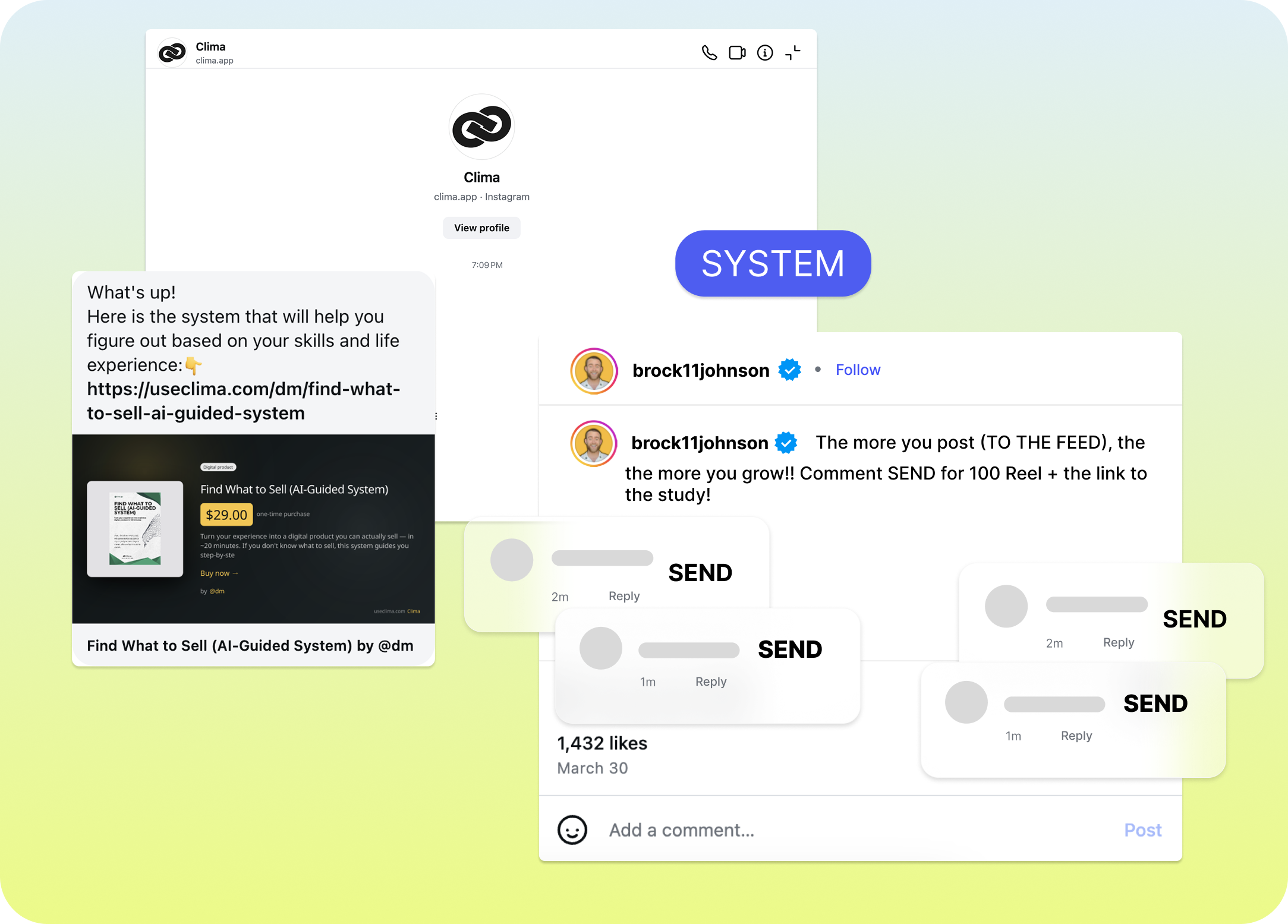
Comment-to-DM automation. One important takeaway from this shift is that owned distribution has become one of the strongest growth levers in 2026. Instead of relying only on the feed, creators can turn comments into direct conversations they control. A post that says, “Comment LINK and I’ll DM you,” drives more comments, sends a strong engagement signal to the algorithm, and moves interested viewers into a direct conversation outside the feed.
Examples by business type
Local business. A Toronto coffee shop might use: #torontocafe, #specialtycoffee, #torontofoodie, #coffeereels, #torontolocal. Each tag is specific, local, and relevant. No generic tags like #coffee with 200 million posts.
Creator selling digital products. A UGC creator might use: #ugccreator, #ugctips, #contentcreatortips, #digitalproducts, #contentcreator2026. Specific to the niche and the audience, not broad.
Ecommerce brand. A skincare brand might use: #cleanbeauty, #skincareenthusiast, #naturalskincare, #glowingskin, #skincaretips. Topic-specific, audience-aware, no mass tags like #beauty.
Instagram hashtag mistakes to avoid in 2026
Using more than five. Posts with more than five hashtags are actively suppressed in distribution. This is no longer a debate.
Using the most popular hashtags. A tag with 500 million posts is a signal with no specificity. Your post disappears instantly into an enormous pool. Smaller, more targeted tags reach fewer people but the right ones.
Using irrelevant tags to reach a bigger audience. Mismatched hashtags create a signal conflict between your content and your tags. The algorithm notices and it hurts distribution.
Copying the same five tags on every post. Each post has a different topic. Each set of tags should reflect that. Rotating relevant tags based on what the post actually covers is more effective than a fixed template.
Treating hashtags as the strategy. They are one small part of how Instagram classifies your content. Strong captions, clear on-screen text, and consistent posting in a niche matter more.
A practical pre-publishing checklist
Before you publish, run through these:
- Does the first line of your caption state the topic clearly with the keywords your audience would search?
- Is the main topic visible as text on screen in the video?
- Have you selected five hashtags that are specific, relevant, and match what this post is actually about?
- Are you posting consistently enough in your niche that Instagram has a clear picture of what your account covers?
If the answer to all four is yes, your post is set up correctly for discovery in 2026.