Why social media marketing is different for solo founders
Most social media marketing advice is written for teams. A content calendar managed by three people. A budget for paid ads. Someone whose entire job is community management.
That is not your situation.
You are building something, shipping it, supporting it, and trying to market it at the same time. Social media either fits into that reality or it does not get done.
This guide is written for that situation. No enterprise frameworks. Just what actually works when you are doing this alone or with a small team.
Why social media is non-optional for builders
If you are building a product, you are competing for attention in a crowded space. There are thousands of tools in every category, and most buyers make decisions based on trust and familiarity before they ever read a feature list.
Social media is how that trust gets built. It is where people discover that you exist, see that you know what you are talking about, and decide whether they want to give you money.
The good news is that solo founders and small teams have an advantage here that large companies cannot replicate: you are a real person building a real thing, and people respond to that. The founder who shows up and talks honestly about what they are building converts better than a polished brand account with stock photos and corporate copy.
The problem is consistency. Most builders start strong and disappear when things get busy. That inconsistency is the main thing that kills social media as a growth channel for small teams.
Pick one or two platforms and own them
The biggest mistake solo founders make is trying to be everywhere at once. Instagram, TikTok, Facebook, YouTube Shorts—all at the same time, all half-heartedly.
Pick the one or two platforms where your audience actually is, and go deep there.
For most product builders and solo founders, Instagram and TikTok are where the organic reach still exists. A well-placed answer to a real question can reach thousands of people who are not following you yet. Facebook works well for community-building and reaching slightly older buyers. YouTube Shorts is worth adding once you have a content rhythm, since it compounds well over time and searchable video has a much longer shelf life than a feed post.
Start with one, build the habit, then expand. You can schedule across all of them from one place once you are ready.
Your process is your content
The hardest part of content creation for builders is figuring out what to post. You are not a lifestyle brand. You do not have photogenic products. You are staring at a code editor most of the day.
That is the content.
Build in public. Share what you are working on, what you are figuring out, what broke and how you fixed it, what you decided not to build and why. This works for three reasons.
First, it creates an audience before you launch. People who follow your build process become your first customers because they feel invested in what you are making.
Second, it signals expertise without you having to claim it. Showing your thinking in public is more convincing than any testimonial.
Third, it is low friction. You do not need to invent content. You just narrate what is already happening.
A post explaining a technical decision you made this week, a screenshot of a dashboard milestone, a question you are wrestling with about pricing—all of it is content that your audience wants to see.
Answer the questions your customers are already asking
Beyond build-in-public content, the highest-performing posts for product builders are answers to questions that potential customers are already typing into search.
Think about what someone types before they discover a tool like yours. What problem are they trying to solve? What are they confused about? What do they not know they do not know?
Write that content. A short video or a post that answers a specific question your customer has is not just useful to your audience, it is discoverable by people who are not following you yet. We wrote a full breakdown of this approach in The Question-First Content Strategy.
Since July 2025, Google indexes public content from professional Instagram accounts. That means a well-written caption answering a real question is now searchable on both Instagram and Google. Every post you write is a small piece of content someone might find through search, not just through their feed. The way you write those captions matters more than it used to, we covered the full shift in Caption SEO Is Real Now.
Consistency beats volume
You do not need to post every day. You need to post often enough that people do not forget you exist.
For most solo founders, that means three to five times a week. The format matters less than the frequency. A one-sentence post that ships beats a perfect carousel that gets stuck in drafts.
The accounts that grow consistently are the ones that show up on a schedule and do not disappear for three weeks when a launch gets stressful. Your audience builds trust with accounts they see regularly.
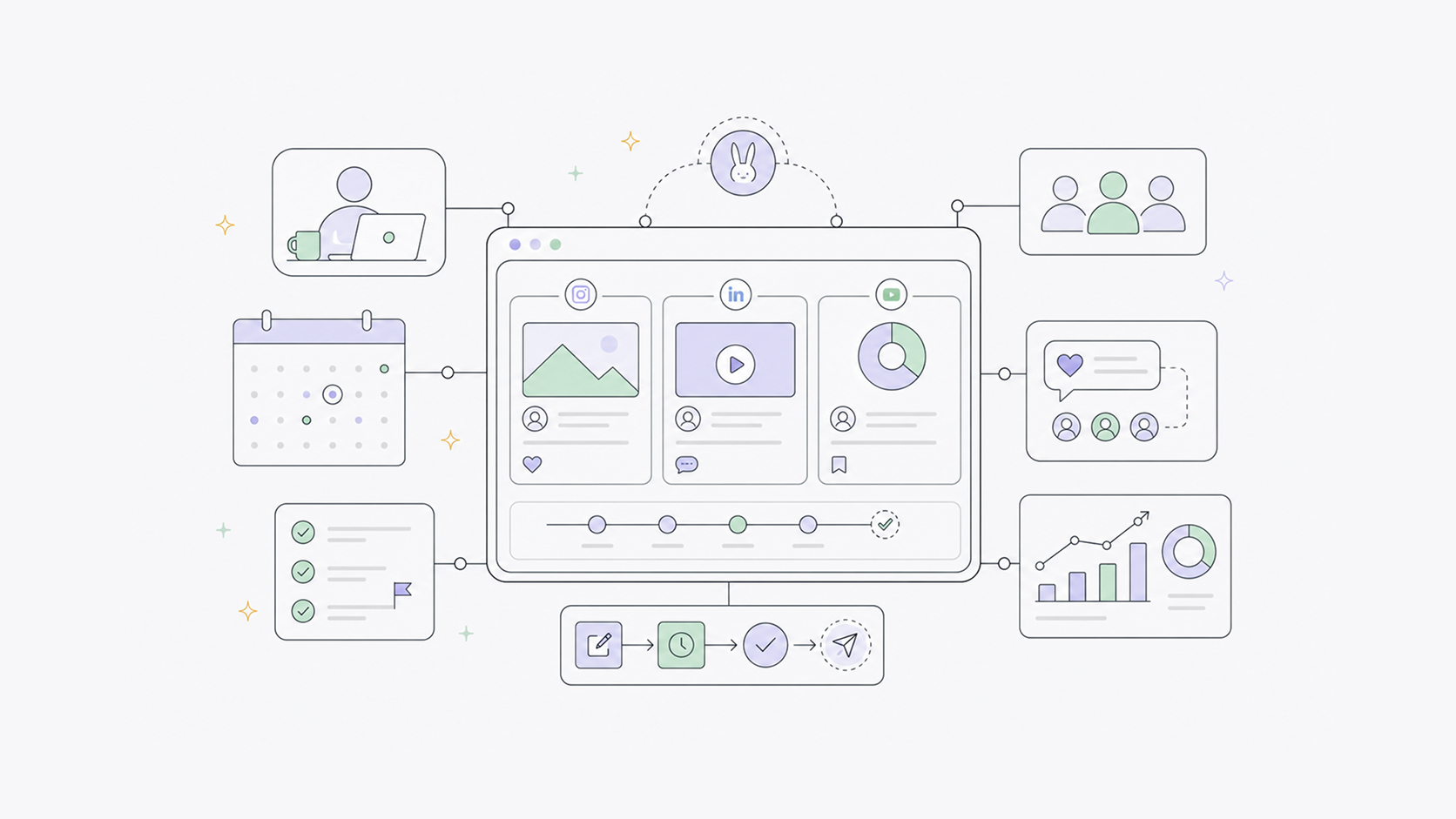
The practical fix is batching. Set aside two hours once a week to write and schedule everything. Make the decision once instead of every day. Once posts are scheduled and queued, they go out automatically while you focus on building. If you are looking for a tool that handles this without per-channel fees, see how the main schedulers compare.
Comments and DMs are a growth channel
Most builders treat comments and DMs as an afterthought. They post, get engagement, and ignore the replies.
That is a mistake. Early comment velocity (meaning people responding quickly and you responding back) is one of the strongest signals to the algorithm that a post is worth distributing further. Replying to every comment in the first hour with something useful, not just an emoji, pushes reach significantly.
DMs are where the highest-intent interactions happen. Someone who takes the time to DM you about your product is a warm lead. Responding quickly matters.
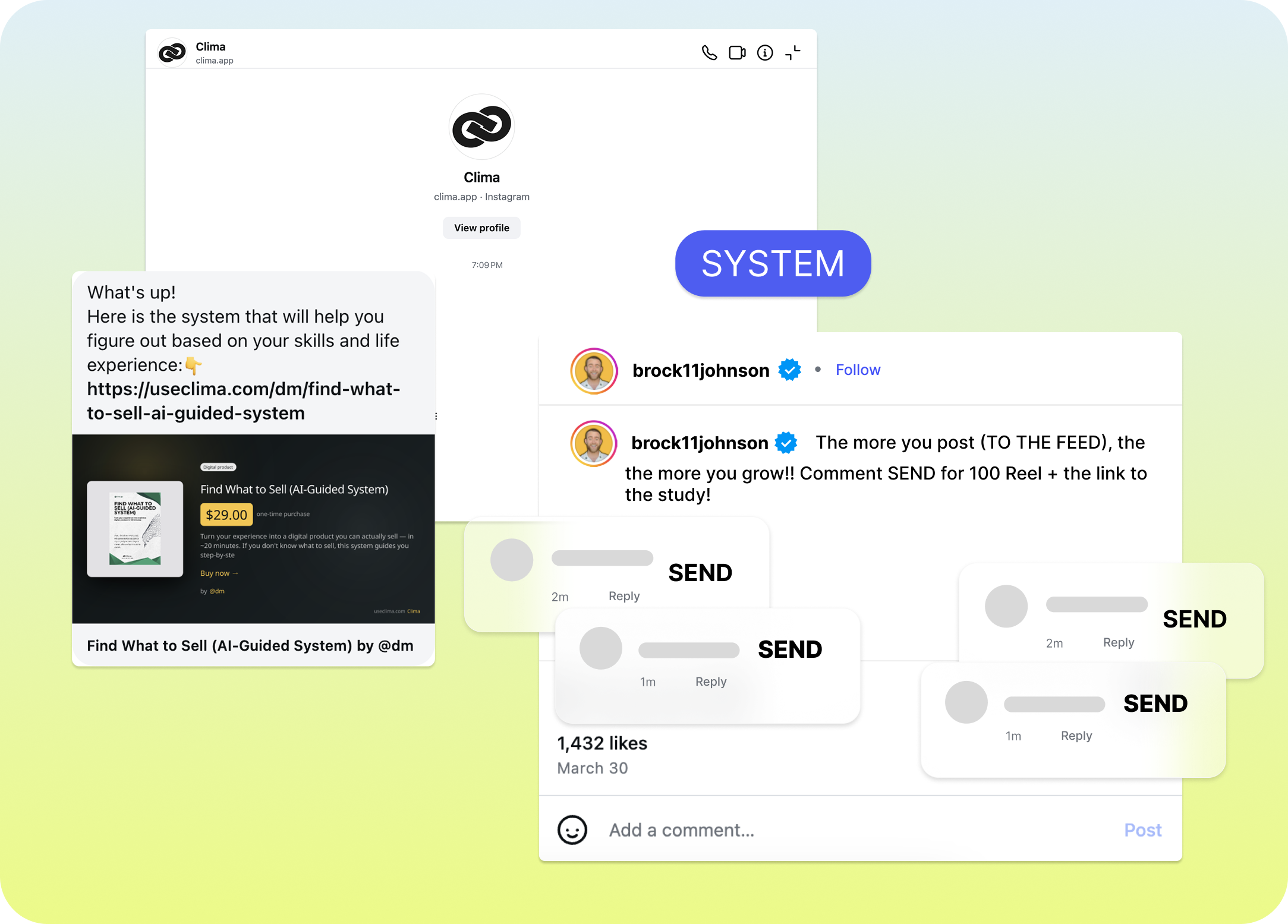
The challenge at scale is that you cannot manually reply to every comment and DM when you are also trying to ship. This is where automation earns its keep. Set up keyword triggers so that when someone comments "LINK" or "PRICING" or DMs a specific word, they get an instant reply with exactly what they need. That interaction happens immediately, 24/7, without you doing anything. We compared the main tools for this in Best Instagram and Facebook Automation Tools.
The engagement still happens. You just do not have to be there for all of it.
What to track when you do not have an analytics team
You do not need a dashboard with forty metrics. You need three numbers.
Reach per post — is your content getting in front of new people or just existing followers? If reach is flat, your content is not being distributed. Try different hooks, different formats, or more specific topics.
Saves and shares — these are the strongest signals that a post has lasting value. Likes are passive. Saves mean someone wants to come back to it. Shares mean they thought it was worth sending to someone else. Both drive algorithmic reach harder than likes.
Comment quality — not just count. Are people asking follow-up questions, sharing their own experience, or tagging someone else? That kind of engagement means your content is landing. Generic "great post" comments are worth nothing.
Check these once a week, not once a day. Optimizing daily leads to reactive posting. Weekly review leads to better patterns.
The advantage you have that large companies do not
A marketing team at a SaaS company has to get six approvals before posting anything. They cannot be vulnerable, spontaneous, or genuinely helpful in real time without going through a process. But you can.
You can post about a feature you almost shipped but decided against. You can share a real number from your analytics. You can respond to a customer complaint in public, fix the issue, and turn a critic into an advocate in the same thread. You can be a person, not a brand voice.
That authenticity is not a nice-to-have for solo founders. It is your main competitive advantage on social media. Large companies spend years and significant budget trying to sound like a person. You already are one. Just use it.